Book a reef snorkeling trip if you swim confidently and want to see coral and tropical fish from the water. Book the glass-bottom boat if you can’t swim, would rather stay dry, or are bringing young children. Both head out toward the Florida Keys reef from Key West, but you spend one in the sea and the other looking down through glass, and on neither trip is clear water guaranteed.
If your group is split between swimmers and non-swimmers, you have two options: separate trips, or one snorkel boat where the non-swimmers ride along on deck. Riding along on a snorkel boat does not give anyone the underwater windows, though; that is only on the glass-bottom boat.
For swimmers, the lowest-priced well-reviewed reef trip from the same Fury pier is Fury’s Reef Snorkeling with Drinks and Sunset Option on GetYourGuide, about three hours on a power catamaran, rated 4.4 from more than 550 reviews. Check the morning, afternoon and sunset departures for your date below.
Fury reef snorkel, morning to sunset
The main differences between the two trips
| Question | Reef snorkeling trip | Glass-bottom boat |
|---|---|---|
| Do you get in the water? | Yes, if you take part | No, you watch from the boat |
| Do you need to swim? | Yes, to snorkel offshore | No |
| What do you see? | Coral, reef fish and other wildlife at eye level, when conditions allow | Coral and marine life under the hull, through the viewing windows |
| Physical effort | Moderate: swimming, fins, and a ladder or stairs back on board | Low, though you still move around the boat and may use stairs |
| Suits | Confident swimmers, active families, underwater photographers | Non-swimmers, mixed-age groups, anyone who wants to stay dry |
| What changes the view | Wind, waves, water clarity, the site and how comfortable you feel | Wind, waves, water clarity, sun angle and what passes under the windows |
| The trade-off | More immersive, but you must be comfortable swimming offshore | Easier and drier, but you see one window-sized patch at a time |
| Length | About 3 hours on Fury’s reef snorkel | About 1 hour 45 minutes to 2 hours on Fury’s glass-bottom boat |
| Example | Fury’s morning reef snorkel | Fury’s Key West glass-bottom boat |
Times and inclusions come from the operators’ current listings and change from season to season. Confirm them for your own departure.
What reef snorkeling in Key West is like
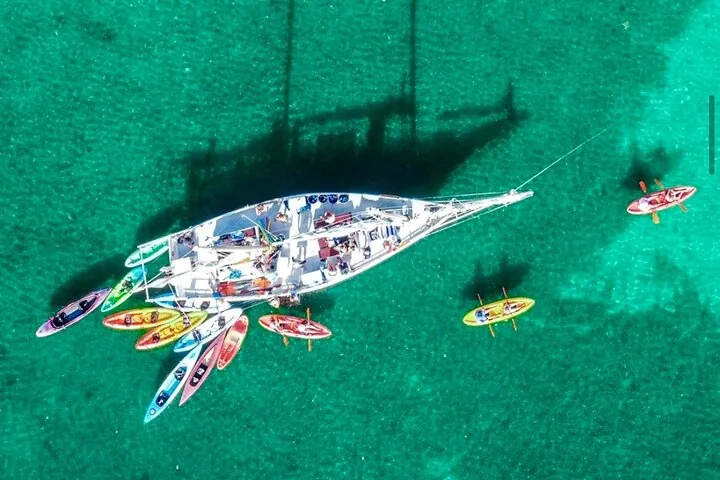
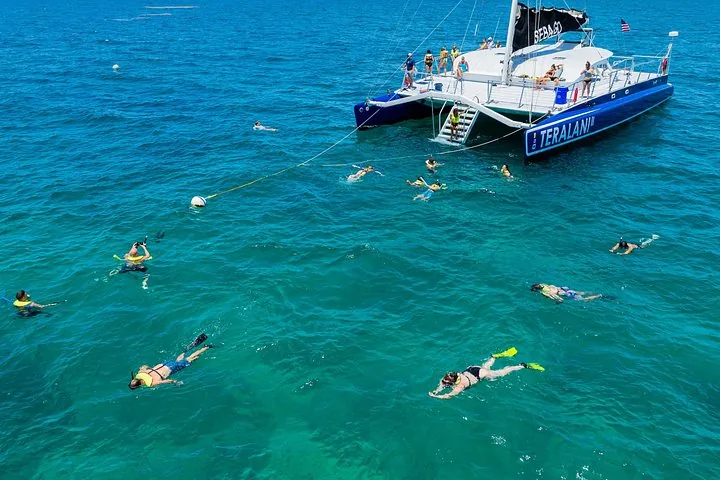
Most Key West reef snorkeling trips leave the harbor and run out to reef sites in the Florida Keys National Marine Sanctuary. The captain picks the site on the day, based on wind and visibility. The crew gives you a briefing, a mask, fins, a snorkel and a flotation vest, and you get in for a supervised session; Fury’s listing gives about 30 to 60 minutes of snorkel time on its reef trip.
The reef here is usually in water too deep to stand in, and first-timers should know that before they book. A flotation vest keeps you up, but it does not replace swimming: the crew watches a whole boatload of snorkelers and cannot stay beside one person. Fury’s FAQ says snorkelers must know how to swim, and it points non-swimmers to its glass-bottom boat. Our safety guide gives the reef depths.
On a good day you float level with the coral while reef fish move below and around you. Visibility changes with the weather, though, and the photographs on the listings come from the best days. Currents, chop or cloudy water can make a session harder work than you expected.
Why people choose snorkeling
- You see the reef from inside the water, closer than any boat window.
- You can turn your head, hover over coral at a safe distance and follow the fish.
- It suits a holiday where swimming and exploring are the main point.
- Some trips add dolphin watching, a sunset sail or a second reef stop to the snorkel.
Reasons to think again
- You can’t swim confidently in open water.
- You don’t like putting your face in the water or breathing through a snorkel.
- You get seasick easily or feel anxious in deep water.
- Cold water or wind would spoil the session for you.
A beginner who can swim usually does fine with a clear briefing and a vest. A non-swimmer should not snorkel offshore on the strength of a vest.
Other experiences
Other Key West snorkeling trips to compare
More ways to explore the area. Each listing shows its own cancellation policy.
What a glass-bottom boat tour in Key West is like
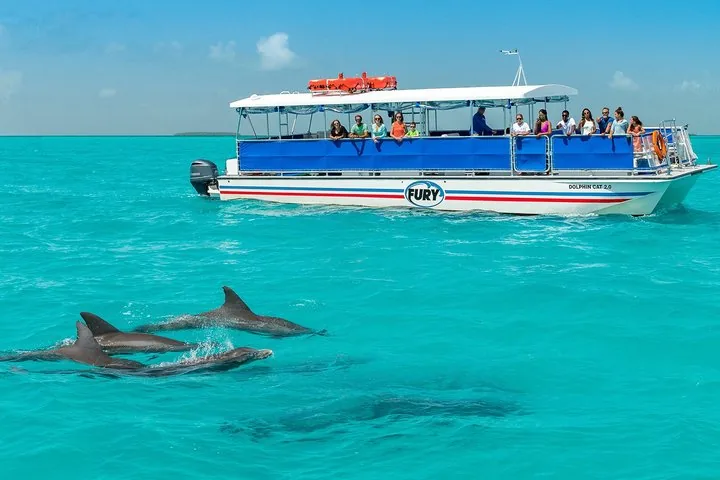
A glass-bottom boat has clear panels in the hull, so you look down at the water, coral and marine life without getting in. You ride out on deck, then move down to the viewing area when the boat reaches the reef, and the crew points out what passes below.
Fury’s Glass Bottom Boat Reef Tour runs about two hours on a 65-foot catamaran, with an enclosed viewing area and an upper deck, and departs at 12:00, 14:00 and 16:00 on its current schedule. It is rated 4.2 from more than 90 reviews on GetYourGuide and 3.9 from more than 600 on Viator’s listing of the same trip, lower than the reef snorkel trips we cover. Its FAQ is clear that it is a viewing trip, with no swimming or snorkeling. That makes it the simplest reef trip for anyone who wants to keep their clothes dry. Our glass-bottom boat page covers the trip itself, and our review looks at what is behind the lower rating.
Why people choose the glass-bottom boat
- No swimming, mask clearing or snorkel technique.
- Many families with young children manage it well, as long as the children follow the onboard safety rules.
- Relatives with very different swimming abilities can share one reef trip.
- You can stay seated and listen to the crew.
- If you spend part of the trip on deck, you still have a harbor ride and the views back to the island.
Reasons to think again
- You look down at the reef; you don’t move through it.
- What you see depends on sunlight, weather, water clarity and what is directly under the boat.
- The viewing windows are shared, so you take turns at the best spots.
- You are still on a moving boat, so it does not prevent seasickness.
Which trip suits non-swimmers?
The glass-bottom boat. If you can’t swim, book the trip designed for viewing without getting in. Of all the questions here, this one has the clearest answer.
On Fury’s snorkel boats, swimming is required to snorkel. Its FAQ also says guests don’t have to snorkel and can ride along, at the same ticket price as everyone else. The GetYourGuide listing for Fury’s reef trip, on the other hand, marks it as not suitable for non-swimmers, so confirm with Fury before booking a ticket for someone who will stay on deck. A guest who rides along sees the reef only from the rail, without the underwater windows of the glass-bottom boat.
If you are a nervous beginner who can swim, work out what worries you. A fear of deep water points to the glass-bottom boat. Unease with a mask often goes away after a little practice in a pool before the trip.
Read our guide to Key West snorkeling for beginners and our glass-bottom boat page for the trips on each side.
Which suits kids, teens and grandparents?
Comfort and safety matter more here than age.
For a family with small children who mostly want to see fish and enjoy a boat ride, the glass-bottom boat is usually easier. The group stays together and nobody needs to swim. Fury describes its glass-bottom boat as great for all ages; parents should still ask about strollers, restrooms, seating, supervision rules and any mobility limits. On Fury’s trips, guests aged 14 and under need a chaperone aged 18 or over on board.
For teens and adults who swim well and want to get wet, the snorkel trip is usually the one they remember. A family with both strong swimmers and non-swimmers can book separate trips, or pick a snorkel boat that lets an observer stay aboard (confirm it first, as above). Ask how much shaded seating there is: not every catamaran has shade for everyone at once. Our family snorkeling page lists the trips that suit children.
For older visitors, the first question is what the real issue is: swimming, stepping aboard, stairs, balance, the sea state or standing for long periods. Neither kind of trip is automatically wheelchair accessible. Ask the operator about boarding and facilities before you assume a glass-bottom cruise will work.
Which gives better underwater views?
For a confident swimmer on a clear day, snorkeling usually gives the more immersive view. You are in the water with the reef and can turn to follow the fish. What you see still depends on the site and the conditions, and you must not touch, stand on or kick the coral.
The glass-bottom boat frames the reef differently. You see it without getting wet, but only the patch of reef under the windows. The boat’s position and movement, the angle of the light and the clarity of the water all change what comes into view.
Sea turtles, rays and sharks
All of these live in Key West waters, but you may not see them on either trip. The photos on the listings show possible encounters, not a checklist. If dolphins are the priority, book a dolphin trip such as Fury’s Dolphin Watch and Snorkel Tour (rated 4.7 from more than 1,200 reviews on Viator), which goes looking for them; a reef trip does not. Never chase, touch or feed wildlife.
Snorkeling or glass-bottom boat: which costs more?
There is not much in it. Fury’s own website advertised its morning reef snorkel from US$39 to US$59 and its glass-bottom boat from US$55 to US$73 when we checked in November 2026, depending on the date and departure. Those are the operator’s direct ranges, not checkout prices, and taxes, fees, discounts and season change the total.
On the booking platforms we link, the same Fury trips start at US$49 for the morning reef snorkel on GetYourGuide and US$64 for the glass-bottom boat on Viator. Compare the platform price with Fury’s direct price for your date.
| What to weigh | Reef snorkeling | Glass-bottom boat |
|---|---|---|
| What the ticket includes | The boat ride, snorkel gear, crew and time in the water | The boat ride, the viewing windows and the crew’s commentary |
| Possible extras | Photos, tips and other optional extras; ask whether wetsuits cost extra | Drinks and snacks, photos, tips and other optional extras |
| The question to ask | Will you get in and snorkel? | Is seeing the reef without swimming the main goal? |
The lowest ticket is not always the better buy. A snorkel ticket you end up not using is worse value than a glass-bottom trip you enjoy from start to finish. Our snorkeling cost page breaks down the prices across operators.
For Fury’s current packages, check its reef snorkeling page and its list of trips and departure points, and compare prices for your exact dates.
How winter conditions change the choice
Boat trips run all winter in Key West, from November to February, but cooler air, wind and choppy spells can affect both comfort and visibility. A calm, sunny day can be excellent for either trip. A windy day is harder going, especially once you are wet after snorkeling. Our water temperature guide gives the monthly figures.
November
Both trips usually run well in November. Cold fronts arrive more often as the month goes on, so book early in your stay and keep another day free in case your trip is moved. More in our November snorkeling guide.
December
When the wind picks up, you feel cold climbing back on board after snorkeling. Pack a towel and a dry layer even when it feels warm ashore. Families who don’t want to get in may prefer the glass-bottom boat, though a rough sea still matters. More in our December snorkeling guide.
January and February
These months bring cool and windy days, and Fury’s FAQ says the water can drop to the mid-60s °F, when some guests prefer the wetsuits it provides. Ask your operator whether wetsuits are available, whether they cost extra, and what happens if the boat can’t safely reach the planned site. The glass-bottom boat keeps you dry, but it still rolls on the way out. More in our January and February guides.
Don’t book on the month alone. The marine forecast, wind direction, visibility and the operator’s call on the day matter much more than the seasonal averages.
What if you get seasick?
Neither trip prevents seasickness. Both are on a moving boat, and both can travel out to the offshore reef. The glass-bottom boat keeps you dry, but some people who are prone to seasickness find that looking down for long stretches makes them feel worse; the CDC’s advice is to keep your eyes on the horizon.
If you are prone to motion sickness:
- Pick a day with a calmer marine forecast, if your schedule allows.
- Ask whether the route is exposed and whether the operator has a sheltered-water option.
- Sit in the middle of the boat, away from the bow, in fresh air and in a steady spot when the crew allows it.
- Ask a pharmacist or doctor about motion-sickness medicine before you travel, and try it at home first, particularly if you have a medical condition or take other medicines. The CDC notes that acupressure wristbands showed no benefit in studies and that ginger has had mixed results.
If the sea would make either boat uncomfortable, change your plans. Neither kind of trip is automatically calm.
Snorkel and glass-bottom combination trips
Some trips combine snorkeling with dolphin watching, a sunset sail or a second reef. Fury’s Double-Dip Snorkel Tour stops at two reef sites (4.6 from more than 200 reviews on Viator), and its Rum and Reggae reef snorkel and sunset sail adds the sunset (4.4 from more than 400 reviews). Don’t assume a “snorkel and boat” trip has underwater windows: a standard reef snorkel catamaran is not a glass-bottom boat.
If you want both snorkeling and dry underwater viewing on one trip, look for a glass viewing area and a swim stop in the listing’s inclusions. If the listing doesn’t name both, assume you get only the main activity.
On a stay of several days, an easier plan is to snorkel the reef on your calmest day and take the glass-bottom boat, a sunset cruise or a sandbar trip on another. Everyone gets the view they came for, with no awkward compromise.
The better first choice for each kind of traveler
| You are traveling as… | Better first choice | Why |
|---|---|---|
| A couple who both love swimming | Reef snorkeling | You share the reef from the water |
| A non-swimmer who wants to see coral | Glass-bottom boat | No getting in |
| Parents with young children | Glass-bottom boat | Easier logistics and less gear |
| A family with teens who swim well | Reef snorkeling | An active trip they will remember |
| A mixed group with one non-swimmer | Glass-bottom boat or separate trips | Nobody is pushed into deep water |
| An underwater photographer | Reef snorkeling | A water-level view, when visibility allows |
| A January visitor worried about cold water | Glass-bottom boat | You stay dry, though wind and waves still apply |
| Someone very sensitive to sea motion | Depends on the forecast and the boat | Neither trip is guaranteed smooth |
Confident swimmers who want a smaller sailing catamaran can also look at Floridays’ Reef Snorkel & Sail, from US$79 and rated 4.7 from more than 570 reviews on Viator.
Questions to ask before you book
Check the exact trip, not only the kind of trip:
- Where does the boat go? An offshore coral reef, a harbor cruise or a sheltered backcountry route?
- Do guests get in the water? If so, do you have to be able to swim?
- How long is it really? Separate the ride out and back from the time at the reef or in the viewing area.
- What gear is included? For snorkeling, confirm the flotation vests and whether wetsuits are available.
- How does the viewing work? On a glass-bottom boat, ask about the windows and how guests take turns at them.
- What happens in bad conditions? Check cancellation, rebooking, refunds and weather-related route changes.
- Does the departure suit your group? Confirm the child rules, boarding access and any health or mobility questions.
- What does the total include? Check fees and optional extras before you pay.
How to treat the reef with care
The Florida Keys National Marine Sanctuary protects a living reef. Whether you snorkel or watch from the boat, pick a careful operator and follow its safety briefing.
For snorkelers, NOAA’s advice is to keep hands, fins and gear off the coral, stay in control of your floating position and keep clear of wildlife. Never stand on the reef, feed the fish or take coral or shells home. NOAA also suggests choosing a Blue Star operator, one that has signed up to its responsible snorkeling and diving practices. Fury asks every snorkeler to use reef-safe sunscreen.
On the glass-bottom boat, follow the crew’s directions, stay in the viewing and seating areas, and never throw anything overboard.
Which trip to book
If you can swim, love the water and want to see the coral up close, the reef snorkel is the better trip: you see the wildlife and coral at eye level instead of through a window. Book it only if the swimming rule fits your ability and your comfort in deep water.
If you can’t swim, are traveling with very young children or don’t want to get wet, book the glass-bottom boat. It still goes out to the reef, and people of every swimming ability can share it.
Book the trip you will take part in, not the one with the most dramatic photos. Then compare the itinerary, the boat’s facilities and the forecast for your date before you pay.
More Key West boat trip guides
- Key West boat tours compared: every kind of boat trip side by side.
- Key West dolphin and snorkel tours: for a trip built around the wildlife.
- Key West sunset cruises: stay dry and watch the evening sky over the harbor.
- Fury vs Sebago vs Sunset Watersports: the three big snorkel fleets compared.
- Key West snorkeling and sandbar tours: shallow-water days, a different trip from the offshore reef.
Frequently asked questions
Is Key West snorkeling a good idea if I have never snorkeled before?
Yes, if you already swim confidently and are comfortable in open water. Many trips give beginners a lesson, but none of them teaches swimming. If getting into deep water is the worry, start with the glass-bottom boat.
Can non-swimmers go on Key West snorkeling boats?
Swimming is required to snorkel. Fury’s FAQ says guests can ride along without getting in, at the same ticket price, but the GetYourGuide listing for its reef trip marks it as not suitable for non-swimmers, so confirm with the operator before booking. A non-swimmer should not get into offshore reef water just because a vest is supplied. To see the reef without swimming, book the glass-bottom boat.
Does the Key West glass-bottom boat go to the coral reef?
Fury’s glass-bottom boat goes out to view the reef, but the site depends on the day’s conditions. Check where your trip goes before booking, because not every sightseeing cruise from Key West visits the reef.
Can you snorkel from a glass-bottom boat?
Not on Fury’s. Its FAQ says the glass-bottom boat is for viewing only, with no snorkeling or swimming. Don’t assume another trip includes a swim stop unless the listing names one.
Is a glass-bottom boat good for toddlers?
It usually suits families with small children better than a reef snorkel. Check the operator’s age rules, seating and onboard safety requirements, and keep children with an adult throughout the trip.
Are glass-bottom boats better in bad weather?
Not always. You stay dry, but an offshore boat still rolls in waves, and rough conditions can cloud the water or cancel the trip. Decide on the day’s marine forecast and the operator’s advice.
Will I see more fish snorkeling or from the glass-bottom boat?
Snorkeling usually gives the more immersive view in good conditions, but nobody can predict which fish you will see or how many. The glass-bottom boat can still show plenty of reef life without anyone getting in.
Is snorkeling in Key West better in the morning or the afternoon?
Neither departure is better every day, because visibility and wind change daily. Pick the departure with the better forecast and follow the operator’s advice. Our morning vs afternoon guide compares the two.
Can I take underwater photos on a glass-bottom boat?
You can photograph through the windows, but reflections, movement and light affect the results. A waterproof camera used while snorkeling gives a different angle, as long as you can handle it without touching the reef.
Is a glass-bottom boat the same as a semi-submarine?
No. On a glass-bottom boat you look down through glass panels in the hull. A semi-submersible usually has a viewing cabin below the waterline with windows facing sideways. Check the boat’s design, not just the word “underwater” in the trip description.
Sources
- Fury Water Adventures, Key West snorkeling: reef trip format, swimming rule and advertised prices.
- Fury Water Adventures, FAQs: swimming and ride-along policy, the glass-bottom boat as a viewing trip, ages, wetsuits and winter water temperature.
- Fury Water Adventures, trips and departure points: glass-bottom boat and reef trip durations and price ranges.
- NOAA, Florida Keys National Marine Sanctuary: diving and snorkeling: the reef and Blue Star operators.
- NOAA, tips for responsible divers and snorkelers: keeping off the coral and away from wildlife.
- CDC Yellow Book, motion sickness: seating, the horizon, trying medicine at home, wristbands and ginger.
Prices and schedules checked November 2026. This is an independent visitor guide; schedules, sightings, prices and sea conditions can change, so confirm on the booking page.
Pick your morning or afternoon
Reef trips leave Key West most days of the year. Wind decides which reef the captain chooses, so check your date and book with free cancellation where you can.
Check dates and prices