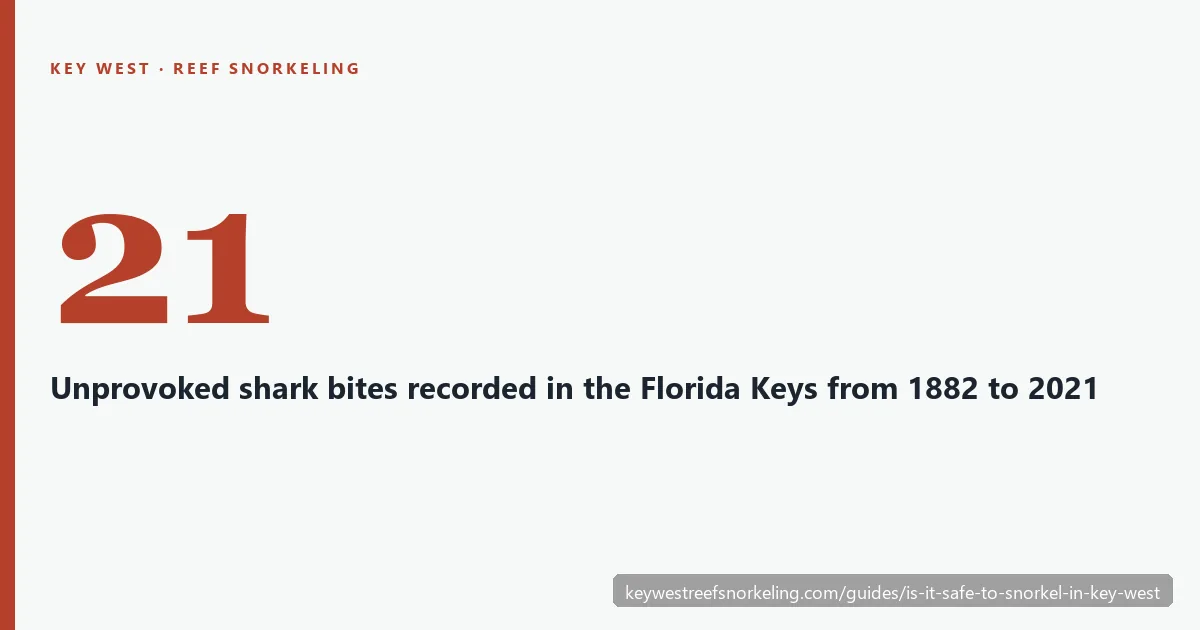
Snorkeling in Key West is safe for confident swimmers on a guided boat trip, and the risks are mostly ordinary ones: choppy water, seasickness, sunburn, and tired swimmers far from the ladder. Shark bites are rare. The Florida Museum’s International Shark Attack File, as reported in 2025, recorded 21 unprovoked bites in Monroe County, which covers the Keys, from 1882 to 2021, against more than 900 statewide over the same years. The rules that keep you safe are simple: be able to swim, wear the vest, listen to the briefing, stay near the boat, and skip the trip on a rough day if you are nervous.
For a nervous or first-time snorkeler, we suggest Dolphin Echo’s shallow-water snorkel and dolphin sail: a sailing catamaran “limited to 14 passengers,” a shallow snorkel stop chosen by the day’s conditions, instruction and gear, from $109 per person (checked November 2026) and rated 4.6 from 476 reviews on Viator. It does not take children under 5, and its cancellation runs on the operator’s own two-week policy, not the networks’ free cancellation.
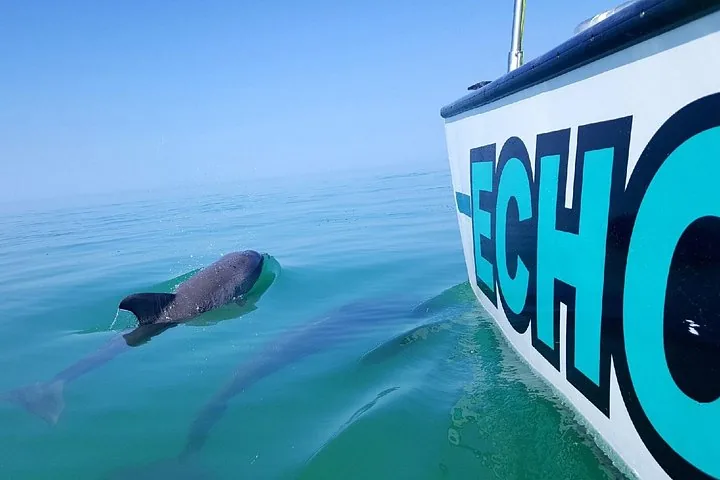
Shallow Water Snorkeling and Dolphin Watching in Key West
- 4.6/5 (476 reviews)
- About 4 hours
- Operated by Dolphin Echo Inc. (Catamaran Echo)
Includes Snorkel equipment and snorkeling instruction · Soft refreshments and a variety of snacks · Fresh tropical fruit tray
You'll choose your date and complete the booking on Viator.
Sharks: what lives here and how often people are bitten
There are sharks in Key West waters. Key West Extreme Adventures, which runs a shark-viewing boat trip, says it uses bait to bring lemon, nurse and other sharks to the side of the boat. That trip is one you watch from the deck; its listing says guests do not get in the water (Shark and Wildlife Viewing Adventure, from $99, rated 5.0 from 3,414 reviews on Viator).
Bites on snorkelers are rare. The 21 unprovoked bites recorded in Monroe County between 1882 and 2021 compare with more than 900 across Florida. They do happen: in 2025 a boy snorkeling off the ocean side of Key Largo was bitten by what was believed to be a reef shark. The sensible habits are the same ones crews teach anyway: do not chase, touch or feed wildlife, give animals space, and get out if the crew calls you in. NOAA’s sanctuary rules now ban feeding fish, including sharks, from a vessel or while diving in federal waters.
Other animals deserve the same respect. NOAA lists stingrays among the common sights, and NOAA notes that fire coral abounds in parts of Sand Key’s reef, one more reason to keep your hands off. Jellyfish appear some days; low-star reviews of Fury’s reef trip mention a day spoiled by them. In some years “sea lice,” the tiny larvae of thimble jellyfish, swarm in the Keys around April and May, according to NOAA as reported in the press.
Rough water and weather: the risk that matters most
The bigger risk on most days is the sea itself. The reef is about seven miles offshore on the Atlantic side, and on a windy day the ride is bumpy and the water at the reef choppy. The National Park Service says winter is usually windier than summer, with rougher seas, and summer brings frequent thunderstorms. Hurricane season runs from 1 June to 30 November.
The operators decide whether to sail. Fury says its tours will not depart in unsafe weather and that it will try to reschedule you during your stay, and the captains choose the snorkel site on the day partly by the conditions. Even so, low-star reviews on several big boats describe trips that went out in waves where many passengers were sick and the snorkeling was hard work. If you are a weak swimmer and the forecast is windy, call the operator and ask to move your trip; booking early in your stay leaves room to do that.
Other experiences
Other Key West snorkeling trips to compare
More ways to explore the area. Each listing shows its own cancellation policy.
Swimming, vests and briefings
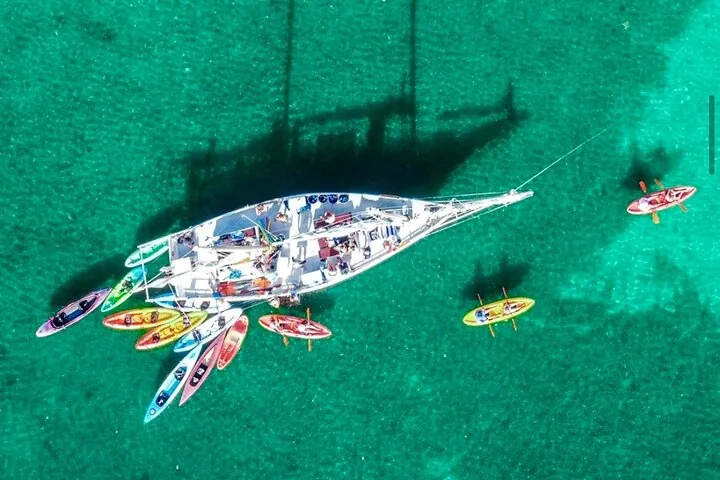
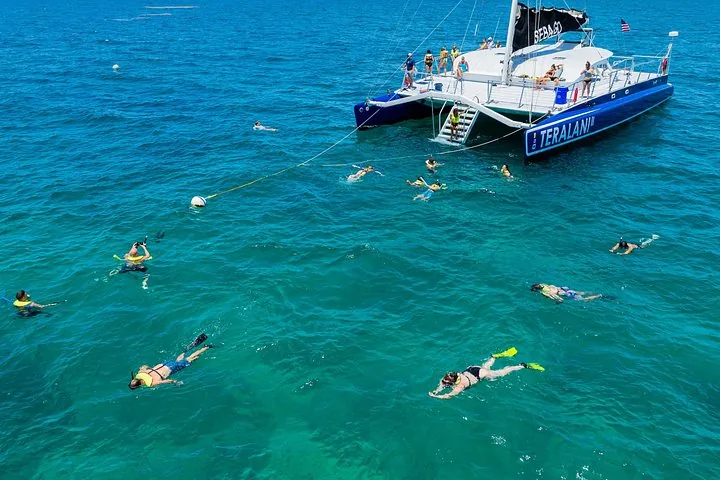
You need to be able to swim. Fury says plainly that you must know how to swim to join any of its snorkel trips, and its GetYourGuide listing names non-swimmers as unsuitable. Floridays recommends that you are comfortable in water over your head. NOAA gives the reef depths off Key West as about 5 to 20 feet at Sand Key’s spurs and 5 to 35 feet at Rock Key and Eastern Dry Rocks, so you will be in deep water even where the reef looks close.
Flotation is standard. Fury gives every guest a flotation device, Sunset Watersports supplies vests and noodles, and Floridays and Fury’s Double Dip list a snorkel vest. NOAA recommends a vest over a noodle for beginners, because noodles drift off, and says that if you need a rest you should float on your back, never stand on the coral.
Every trip starts with instruction. Sunset Watersports’ morning listing describes a safety briefing at the snorkel site; Fury and Sebago list professional instruction. The quality varies: some low-star reviews describe little guidance once people are in the water. If you want someone beside you, choose a boat with a cap and a guide in the water, and tell the crew at the start. Honest Eco’s dolphin watch and guided snorkel, run by biologists in small groups, is built around that, from $143 and rated 4.9 from 598 reviews on Viator (our review). For first-timers, see our beginner snorkeling page.
Alcohol, seasickness and health
Drinks and snorkeling do not mix, and the better operators enforce it. Fury serves no alcohol until the snorkeling is over, and guests who arrive under the influence can be kept out of the water. Dolphin Echo refuses boarding to anyone who shows up intoxicated. If your trip pours drinks on the way out, wait.
For seasickness, the CDC’s advice is to stay away from the parts of the boat that move most, such as the bow, keep your eyes on the horizon, avoid reading and screens, sleep well, drink water, eat small meals and limit alcohol. If you use medication, take it before symptoms start and try it at home first. The CDC says acupressure bands show no benefit over placebo, the evidence for ginger is mixed, and antihistamines can dangerously oversedate young children. Ask your own doctor about anything beyond that.
Several listings, including Fury’s and Sebago’s, say their trips are not recommended for travellers with poor cardiovascular health, and Key West Schooners asks for moderate fitness because you climb a ladder to re-board.
Sun, cold and reef rules
The sun is the most reliable hazard of the day. NOAA recommends mineral sunscreens with zinc oxide or titanium oxide, plus hats, long sleeves and a rash guard; it says oxybenzone can be toxic to corals. Fury requires reef-safe sunscreen and hands out a mineral one free. Key West’s planned sunscreen ban never took effect, because a 2020 state law took the power away from cities, so this is an operator rule and good practice, not a city law.
In winter, cold can tire you faster than you expect. The harbour gauge averages about 72 to 75 °F from December to February and can dip lower after fronts. Fury suggests a wetsuit in January and February, and Danger Charters includes them in winter.
Reef rules protect you and the coral. In the sanctuary’s protected areas you may not touch or stand on coral, living or dead, or remove marine life. Keep your fins up and your hands to yourself.
The safest way to book
- Nervous swimmers: Dolphin Echo, 14 passengers, shallow stop, $109 (our review).
- Calm, shallow backcountry with a crew that teaches: Danger Charters’ half day, “limited to 20 guests,” wetsuits in winter, from $125, rated 4.9 from 1,832 reviews on Viator.
- The reef on a boat with a strict no-alcohol-before-snorkeling rule: Fury’s reef snorkel, from $49, rated 4.5 from 615 reviews on GetYourGuide.
- Non-swimmers: stay dry on the glass-bottom boat.
Frequently asked questions
Is it dangerous to snorkel in Key West?
Not for a confident swimmer on a guided trip in reasonable weather. The common problems are seasickness, choppy water, sunburn and fatigue. Wear the vest, stay near the boat and skip rough days if you are nervous.
Are there sharks in Key West?
Yes. A local shark-viewing operator attracts lemon and nurse sharks with bait, and a 2025 bite off Key Largo was blamed on a reef shark. Bites are rare: 21 unprovoked bites were recorded in Monroe County from 1882 to 2021.
Are there shark attacks in Key West?
Very few. The International Shark Attack File, as reported in 2025, counted 21 unprovoked bites in the whole of Monroe County from 1882 to 2021, against more than 900 statewide.
Can you swim with sharks in Key West?
Not on the shark tour: Key West Extreme Adventures’ shark-viewing trip keeps guests on the boat. On reef snorkel trips you may see a shark; give it space and follow the crew.
Is it safe to snorkel in the Florida Keys?
Yes, with the same precautions: swim ability, flotation, a guided boat and attention to the weather. Reef depths off Key West run about 5 to 35 feet, so treat it as open water.
Pick your morning or afternoon
Reef trips leave Key West most days of the year. Wind decides which reef the captain chooses, so check your date and book with free cancellation where you can.
Check dates and prices