
You can snorkel in Key West in every month, and the best time depends on what you mind most. For the warmest water, go from June to September, when NOAA’s Key West gauge averages 86 to 89 °F; you accept thunderstorms and the peak of hurricane season. For drier, milder days, go from November to April, the dry season; you accept cooler water (72.5 to 78.9 °F on average) and windier days after cold fronts, when some trips move. May is the month where the two overlap: the water averages 83.1 °F, the dry season runs to about mid-May, and hurricane season does not start until 1 June.
For time of day, a morning trip puts the snorkel first and leaves you the afternoon. Sunset Watersports’ Reef Morning Snorkeling with Breakfast and Mimosas leaves the Historic Seaport at 9:00 a.m., runs three hours and costs from $59 per person (checked November 2026), with 4.5 from 744 reviews on Viator. Our review covers the boat and what the breakfast is.
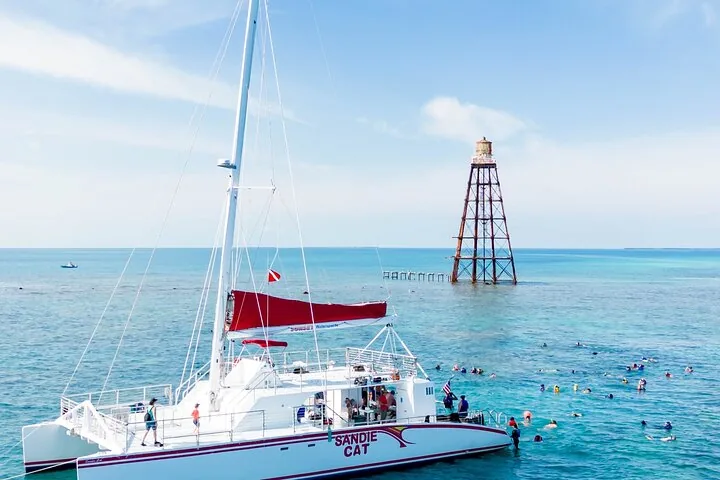
Key West Reef Morning Snorkeling with Breakfast and Mimosas
- 4.5/5 (744 reviews)
- About 3 hours
- Free cancellation
- Operated by Sunset Watersports
Includes Light breakfast · Use of snorkeling equipment · Crew instruction on how to snorkel
You'll choose your date and complete the booking on Viator. Free cancellation under Viator's standard terms; the booking page shows the deadline.
Key West snorkeling season by season
The Keys have two seasons. The National Park Service, writing about the Dry Tortugas 70 miles west of Key West, describes a dry season from about November to mid-May and a wet season from about mid-May to November. The water temperatures below are NOAA’s monthly means for the Key West harbour gauge; air temperatures are National Weather Service 1991-2020 normals.
| Season | Months | Water (monthly mean) | Air (average high) | The trade-off |
|---|---|---|---|---|
| Winter | December to February | 72.5 to 75.3 °F | about 75 to 78 °F | Driest and coolest; cold fronts bring wind and rougher seas |
| Spring | March to mid-May | 75.9 to 83.1 °F | about 79 to 86 °F | Water warming, still dry; spring break crowds; sea lice in some years |
| Summer | mid-May to September | 83.1 to 88.7 °F | about 86 to 91 °F | Warmest water; wet season with frequent thunderstorms; hurricane season |
| Autumn | October and November | 83.7 to 78.3 °F | about 81 to 86 °F | Water cooling, rain easing; hurricane season ends 30 November |
The harbour gauge reads warmer than the reef in summer. Fury Water Adventures, which runs reef trips about seven miles offshore, says its summer reef water is in the low-to-mid 80s °F. Our water temperature by month page has the full table in °F and °C and what each range feels like in the water.
Rain follows the seasons. In the NWS Key West normals, March is the driest month at 1.41 inches and September the wettest at 8.24 inches, out of about 46 inches a year.
Winter: November to February
Winter is dry, mild and the coolest time for the water. The harbour averages 78.3 °F in November, 75.3 °F in December, 72.5 °F in January and 73.8 °F in February, and Fury says reef water can dip into the mid-60s °F in winter. The National Park Service notes that cold fronts push cool, dry air south, and that winter is typically windier than summer, so seas are usually rougher. Fury will not leave the dock in unsafe weather and tries to rebook you during your stay. No one publishes how often that happens.
Boats run all winter, and Fury offers wetsuits to January and February visitors. Our winter snorkeling guide covers fronts, wind and what to wear, and each month has its own booking guide: November, December, January and February.
Other experiences
Other Key West snorkeling trips to compare
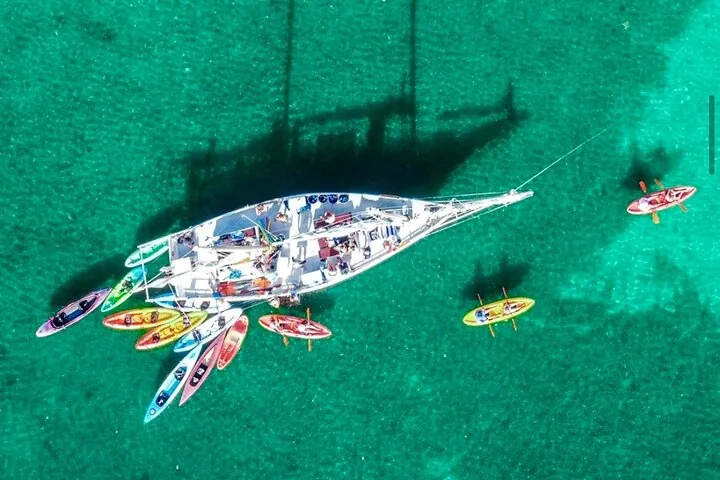
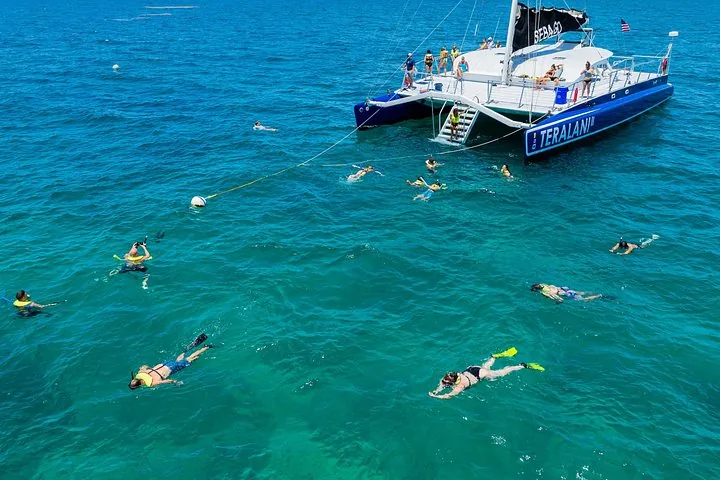
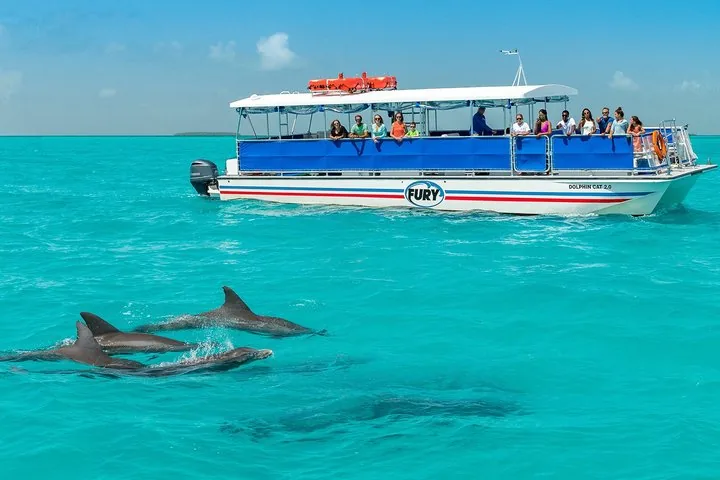
More ways to explore the area. Each listing shows its own cancellation policy.
Spring and spring break: March to May
March is when the water starts to warm: the harbour averages 75.9 °F, up from 73.8 °F in February, and it is the driest month of the year in the NWS normals. Average highs are about 79 to 80 °F and lows about 67 to 69 °F. April averages 78.9 °F in the water and May 83.1 °F.
Spring break is the crowd factor. Local press puts the Key West spring break season at roughly mid-March to April; 2027 school dates were not available when we checked, so look up your own dates. If your trip falls in those weeks, book the snorkel trip when you book the room, and pick a departure early in your stay so a windy day can move.
March is also when some seasonal trips come back. Sunset Watersports’ 2 Reef Snorkel Tour and Sunset Cruise (from $75 per person, 4.7 from 210 reviews on Viator) has Viator dates from 7 March 2027; see our review.
Late spring brings one nuisance. NOAA’s sanctuary staff have said that swarms of sea lice, the larvae of thimble jellyfish that cause an itchy rash, appear in some years in the Keys around April and May.
Summer: June to September
Summer is the warmest water of the year. The harbour gauge averages 86.3 °F in June, 87.6 °F in July, 88.7 °F in August and 87.2 °F in September, and even the cooler offshore reef water is in the 80s. You can stay in for the whole stop without a second thought about cold, and long trips such as a double-dip with two snorkel stops or a sandbar day are comfortable.
The cost is weather. Summer is the wet season, with frequent thunderstorms, and average highs of about 88 to 91 °F. The harbour gauge also shows lighter average wind in high summer: about 5 to 6.5 knots in July and August against about 8 to 10 knots from January to April, though that sheltered gauge is only a rough guide to the open water. Very warm water is also hard on coral: the 2023 marine heatwave caused the worst mass bleaching on record in Florida, and nearly all the elkhorn and staghorn colonies around the Keys died. The reefs still support fish, turtles and some coral, and recovery is incomplete.
Hurricane season: 1 June to 30 November
The Atlantic hurricane season runs from 1 June to 30 November, and its peak is around 10 September. August to October carries the highest risk, which is also when the water is warmest and the rain heaviest (September averages 8.24 inches).
A storm in the forecast does not end a trip, but it can close the water for days. If you travel in August, September or October:
- Book trips with free cancellation. Every Viator and GetYourGuide reef trip we review shows its policy on the listing.
- Put the snorkel trip early in your stay so it can move if a system passes.
- Keep an eye on the National Hurricane Center’s outlook in the week before you fly.
October is a reasonable middle ground for many people: the water still averages 83.7 °F and the rain starts to ease, but you are still inside the season.
Best time of day to snorkel
Key West trips run at three times of day, and each suits a different traveler. Nobody publishes reef visibility or wind by the hour, so choose on what the trip includes and how you want your day to run.
- Morning, about 9:00 to 10:30 a.m. You snorkel first and have the rest of the day free. Morning trips often add breakfast and mimosas, such as the Sunset Watersports trip above or Sebago’s Morning Snorkel Sail. See our morning snorkeling guide.
- Afternoon, about 12:30 to 2:00 p.m. You get a slow morning and an open bar after the swim, as on Sebago’s Afternoon Snorkel Sail. See our afternoon snorkeling guide.
- Sunset, from about 4:00 p.m. You snorkel and then watch the sun go down from the deck, as on Fury’s Rum and Reggae trip. Start times move with the season, so check the time on the listing for your date. See our sunset snorkel guide.
Fury’s listings say alcohol is served only after the snorkeling; other operators set their own rule, so read the listing. If you are still deciding between the first two, our morning versus afternoon comparison goes through the differences trip by trip.
Frequently asked questions
What is the best month to snorkel in Key West?
There is no single best month. For the warmest water pick June to September (86 to 89 °F at the harbour gauge). For the best balance of warm water and dry weather before hurricane season, pick May, when the water averages 83.1 °F.
What is the best time of day to snorkel in Key West?
It depends on your day. Morning trips put the snorkel first and leave the afternoon free; afternoon trips start around 12:30 to 2:00 p.m. with drinks after; sunset trips add a sunset sail. No published data shows the reef is clearer at one hour than another.
Can you snorkel in Key West in March?
Yes. The water averages 75.9 °F in March, it is the driest month of the year, and boats run as usual. Spring break crowds arrive from roughly mid-March, so book ahead.
Can you snorkel in Key West in April?
Yes. The water averages 78.9 °F, warm enough for most people in a swimsuit and rash guard. Sea lice swarms appear in some years in the Keys around April and May.
Is October a good time to visit Key West for snorkeling?
It can be. The water still averages 83.7 °F and rain is easing from September’s peak, but October is inside hurricane season, which runs to 30 November. Book trips with free cancellation.
Pick your morning or afternoon
Reef trips leave Key West most days of the year. Wind decides which reef the captain chooses, so check your date and book with free cancellation where you can.
Check dates and prices