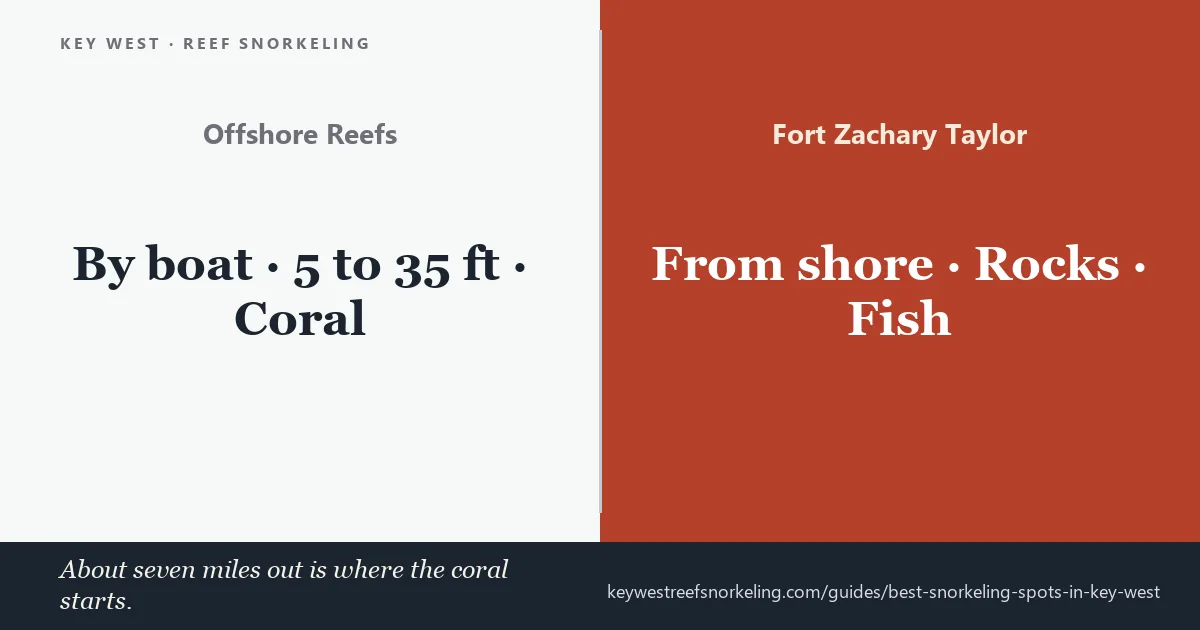
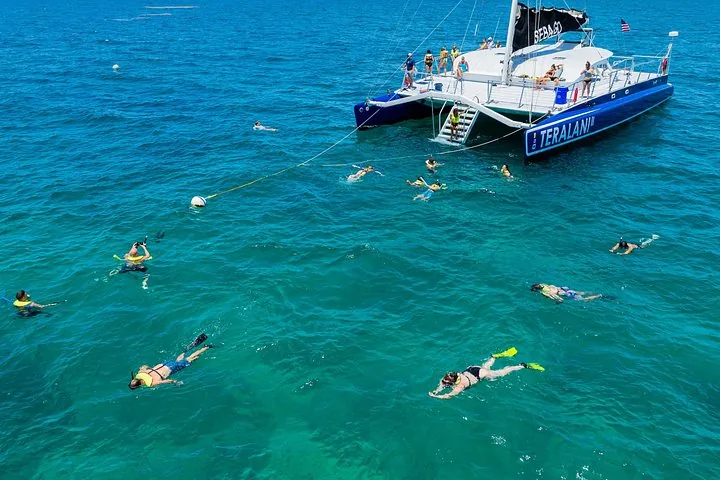
The best snorkeling in Key West is on the offshore reef line, about seven miles out on the Atlantic side, at named reefs such as Sand Key, Rock Key and Eastern Dry Rocks. You can only reach them by boat, and on a group trip the captain picks the reef on the day from the weather and the water. From shore, Fort Zachary Taylor Historic State Park is the usual choice: rocky, shallow and good for fish around the rocks, but it is not the reef. The third option is the backcountry north and west of the island, where sail-and-kayak trips snorkel very shallow water in the Key West National Wildlife Refuge.
If you want one trip that does the reef properly, Floridays’ Reef Snorkel & Sail is a three-hour sail with about an hour out, an hour at the reef and an hour back. It costs from $79 per person (checked November 2026) and holds 4.7 from 569 reviews on Viator.
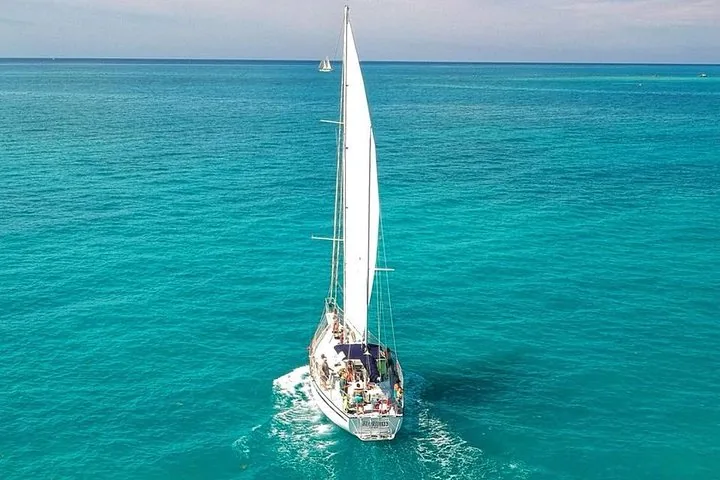
Key West Reef Snorkel & Sail Adventure
- 4.7/5 (569 reviews)
- About 3 hours
- Free cancellation
- Operated by Floridays
Includes Mask, snorkel, fins and flotation vest (sanitized) · Professional guidance on using the gear · Water and soda
You'll choose your date and complete the booking on Viator. Free cancellation under Viator's standard terms; the booking page shows the deadline.
The offshore reefs: where the coral is
Key West’s reefs are part of Florida’s Coral Reef inside the Florida Keys National Marine Sanctuary. Fury Water Adventures describes the living reef as about seven miles offshore on the Atlantic side, and that matches NOAA’s placement of Sand Key, just about 7 miles west of Key West. Working from NOAA’s own descriptions, the three reefs closest together run west to east: Sand Key, then Rock Key about a mile east of the old Sand Key Lighthouse, then Eastern Dry Rocks.
| Reef | Where | Depth NOAA gives | Status |
|---|---|---|---|
| Sand Key | About 7 miles west-southwest of Key West, at the old lighthouse | Spurs 5 to 20 feet; ledge about 65 feet on the south side | Sanctuary Preservation Area, 286 acres |
| Rock Key | About 1 mile east of Sand Key Light | 5 to 35 feet | Has been an SPA; the 2025 final rule removed that designation where the new rule applies |
| Eastern Dry Rocks | Roughly 6 to 7 miles off Key West, east of Sand Key | 5 to 35 feet | SPA, 90 acres; a Mission: Iconic Reefs restoration site |
| Western Sambo | Off Boca Chica Key, east of Key West | Not published by NOAA | Ecological reserve, fully protected |
Sand Key is the one most people have heard of, because the lighthouse makes it easy to picture. Its reef is classic spur and groove: ridges of coral 5 to 20 feet deep with sandy channels between them, and fire coral in several sections, so keep your hands to yourself. Our Sand Key guide covers it in detail.
Rock Key and Eastern Dry Rocks are smaller, with a rubble zone and long fingers of coral cut by sand and coral-filled canyons. Fury’s FAQ names Rock Key as a place its crews often see turtles. Eastern Dry Rocks is the only Key West reef in NOAA’s Mission: Iconic Reefs programme, and thousands of coral fragments have been planted there. Read about both in our Eastern Dry Rocks and Rock Key guide.
Western Sambo is the fully protected reserve off Boca Chica Key. It has a strong search following, but none of the trips we review names it. Our Western Sambo guide explains what is known and what is not.
Which reef your boat will visit
This is the question every visitor asks, and the answer is the same across operators: the captain decides on the morning, by wind and water. Fury’s reef listing on GetYourGuide says the snorkel locations “are subject to weather conditions and are at the Captain’s discretion.” Sebago’s afternoon trip says the captain will select the exact location based on water and wind. Floridays says it has several reefs to choose from on both the north and south sides of Key West.
So treat any reef name you see as a possibility, not a booking. A few listings do name one. Sebago’s Low Country Seafood Two Stop Snorkel says it snorkels two locations “such as Sand Key or another nearby location” ($80 per person, 4.6 from 39 reviews on Viator). Fury’s Double Dip promises two reef locations without naming them; see our review and the double-dip page. If a specific reef matters to you, a private boat is the way to ask for it, and Fury’s FAQ says its private charters can stop at Sand Key. Our private charters page compares them.
What you will see also depends on the year. The 2023 marine heatwave was the worst bleaching event on record for Florida’s Coral Reef, and around the Keys and Dry Tortugas 98 to 100 percent of elkhorn and staghorn colonies died. NOAA’s own pages for Sand Key, Rock Key and Eastern Dry Rocks warn that their coral descriptions may be out of date. The reefs still hold fish, turtles and living coral, but the big branching thickets in older photos are mostly gone. Marine life is never guaranteed on any trip.
Other experiences
Other Key West snorkeling trips to compare
More ways to explore the area. Each listing shows its own cancellation policy.
Shore snorkeling: Fort Zachary Taylor and its limits
You can snorkel in Key West without a tour. The usual spot is the beach at Fort Zachary Taylor Historic State Park on the southwest tip of the island. The park’s fee page lists about $6 per vehicle plus 50 cents a person, $4.50 for a single-occupant vehicle and $2.50 on foot or by bike, and the park opens at 8 a.m. daily. Check the park’s site before you go, since the fee wording we found was not clear.
Expect a coral-rock shoreline with jetties and rocks a short swim out that attract fish. Water shoes help, and you should stay away from the outer rocks when surf is up. The park says no lifeguards are on duty. What you will not find is the reef itself: shore water is shallow nearshore habitat, and the coral reef line is miles offshore. Our shore snorkeling guide covers the beach, gear and the boat-versus-shore choice.
The backcountry: flats, mangroves and sandbars
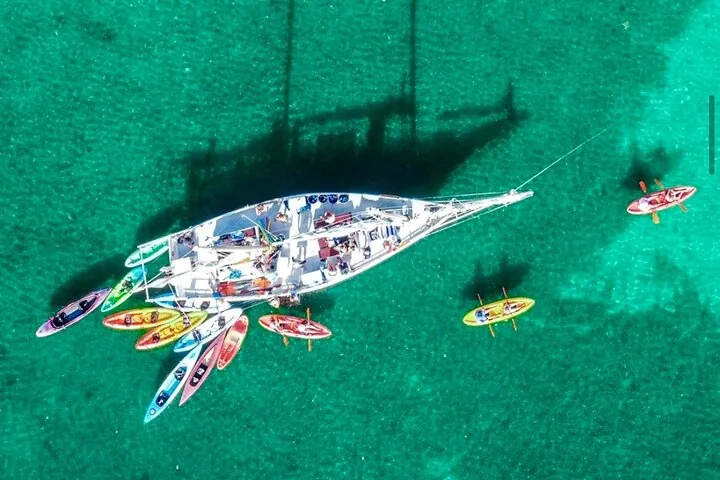
North and west of Key West, the water inside the Key West National Wildlife Refuge is calm and very shallow, with seagrass, mangrove islands and sandbars. Small-boat trips snorkel here, not on the reef. Danger Charters’ half-day kayak, snorkel and sail describes the calm, protected waters of the refuge and is limited to 20 guests ($125 per person, 4.9 from 1,832 reviews on Viator; our review). Key West Schooners’ backcountry sail, snorkel and kayak runs five hours ($119 per person, 4.9 from 114 reviews on Viator; our review).
The backcountry suits nervous swimmers and anyone who wants calm water and kayaking as much as coral. If coral is the goal, book the reef. The sandbar and snorkel page and our catamaran vs small boat guide go further.
Rules on the reef
Inside a Sanctuary Preservation Area you may not fish or take any marine life, touch or stand on coral (living or dead), or anchor on coral. SPAs are marked around the edge by yellow buoys 30 inches across, and boats tie to mooring buoys. NOAA also asks snorkelers to use a vest over a pool noodle and to float on their back if they need a rest.
Sunscreen is an operator rule, not a city law. Key West voted to ban oxybenzone and octinoxate sunscreens, but Florida’s 2020 preemption law meant the ban never took effect. NOAA recommends mineral zinc oxide or titanium oxide and a rash guard, and Fury requires reef-safe sunscreen on its trips and provides it free.
How to choose
- You want the reef and a sure departure: a big catamaran trip from the reef snorkeling tours page. The captain picks the spot.
- You want the cheapest way onto the reef: Fury’s morning trip from $49, on our cheap snorkeling page.
- You want free and flexible: Fort Zachary Taylor, knowing it is not the reef.
- You want calm water and a small group: a backcountry schooner.
- You are comparing islands: our Key West vs Key Largo guide and Dry Tortugas comparison.
Frequently asked questions
Where is the best snorkeling in Key West?
On the offshore reef line about seven miles out, at reefs such as Sand Key, Rock Key and Eastern Dry Rocks. You need a boat, and on group trips the captain chooses the reef on the day by weather and water.
Can you snorkel in Key West without a tour?
Yes. Fort Zachary Taylor Historic State Park has a rocky beach with fish around the nearshore rocks, for a small park entry fee. It is shallow nearshore water, not the coral reef, and no lifeguards are on duty.
Is there a Key West snorkeling map?
NOAA publishes the sanctuary zones, and its Florida Keys sanctuary app shows where each protected area lies. On the water, yellow buoys 30 inches across mark the edge of a Sanctuary Preservation Area such as Sand Key.
What is the best Florida Key for snorkeling?
It depends on what you want. Key West has the reefs off its south side and a big choice of trips; Key Largo has John Pennekamp Coral Reef State Park; Looe Key, off Ramrod Key, is a large spur-and-groove reef. Our Key West vs Key Largo guide compares them.
How deep are the reefs off Key West?
NOAA gives 5 to 20 feet for the coral spurs at Sand Key and 5 to 35 feet at Rock Key and Eastern Dry Rocks. Snorkelers float over the shallower parts.
Pick your morning or afternoon
Reef trips leave Key West most days of the year. Wind decides which reef the captain chooses, so check your date and book with free cancellation where you can.
Check dates and prices